
Ukraine observes World Blood Donor Day, emphasizing the crucial role of regular donations in saving lives. The greatest demand for blood continues to be in frontline regions.
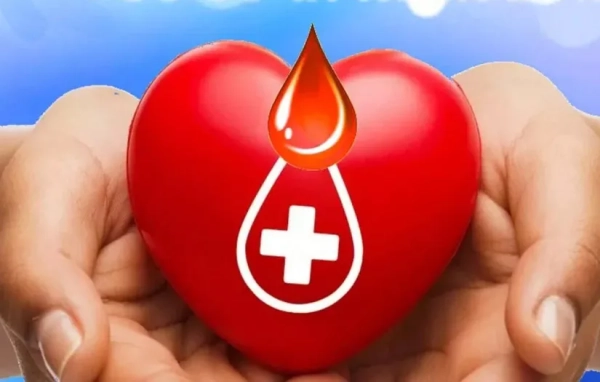
Today, June 14th, numerous events are being held worldwide in observance of World Blood Donor Day. This occasion was established by the United Nations in 2005. The date was chosen deliberately; it marks the birthday of Austrian physician-immunologist Karl Landsteiner, a Nobel laureate for his discovery of blood groups, born on June 14, 1868, as reported by UNN.
World Blood Donor Day: Why June 14th
Every year on June 14th, countries globally celebrate World Blood Donor Day. This event aims to draw public attention to the world’s need for safe blood and its components or products, and to express gratitude to blood donors for their contributions that help save human lives.
In 2005, the World Health Assembly adopted a resolution to establish World Blood Donor Day. The choice of June 14th is significant. On this very day in 1868, Karl Landsteiner, an Austrian physician and immunologist who received the Nobel Prize in 1930, was born. He is credited with discovering human blood groups.
The Situation with Blood Donation in Ukraine
As stated by Iryna Slavinska, CEO of the NGO “All-Ukrainian Association for Blood Donation Development ‘Donor.UA’,” in her commentary to UNN, all countries face challenges in recruiting blood donors. Developed nations address this through substantial investments in the development of the donor movement, communication campaigns, and other initiatives.
Unfortunately, the absence of blood in Ukraine has always been addressed by the patients themselves who need it, their relatives, or friends. This means that a blood shortage existed long before the full-scale war – the system had been operating for years with a lower supply level than international standards recommend. After the full-scale war began, the demand for blood significantly increased – by at least 60%. Simultaneously, oncology, surgery, obstetrics, and many other medical fields require blood daily, regardless of events at the front.
– notes Slavinska.
However, according to her, the primary issue is not just the number of people who donate, but the lack of regularity. Most Ukrainians donate blood sporadically, often only once, whereas the stability of the system is ensured by those donors who return repeatedly.
The Most Acute Blood Shortage Problem is in Frontline Regions
Slavinska pointed out that the demand for blood is not uniform and changes almost weekly, depending on the workload of specific hospitals and regions. The most critical need typically arises in frontline areas and regions where wounded soldiers are transported.
In our work, we emphasize the importance of building a consistent base of regular donors across the entire country, so the system does not depend on localized spikes in activity in individual cities. The demand for blood varies depending on the situation in specific hospitals and regions, but it is traditionally highest in frontline areas and large medical centers that receive a significant number of patients.
– adds Slavinska.
“Common Blood Types Are Always Sufficient” – A Myth
She stresses that the most universal and therefore especially sought-after blood type is the first group with a Rh-negative factor – 0(I) Rh−, which can be used for transfusions in emergency situations.
Meanwhile, the demand for specific blood types constantly changes.
That is precisely why we urge people to donate blood regardless of their blood type or Rh factor – the blood system needs all blood types and all Rh factors. If you think your blood type is abundant because it’s common – that’s a misconception.
– Slavinska emphasizes.
Number of Blood Donors in Ukraine
Currently, Ukraine lacks a unified state register of donors that would allow for the precise tracking of active donors nationwide. Therefore, according to Slavinska, the implementation of the “eKrov” system is crucial – a digital tool that will enable tracking the journey of blood from donor to patient, as well as enhancing control over the quality, safety, and accessibility of blood components. The Ministry of Health of Ukraine has been working on implementing this functionality since 2023.
For the stable operation of the blood system, Ukraine needs approximately 1 million regular donors. We are systematically working to increase this number. As of June 2026, over 220,000 donors are registered on the DonorUA platform. This is an active community of people who receive notifications about scheduled donations, can sign up for events, and respond to the needs of specific patients.
– adds Slavinska.
The Biggest Challenge – Short-Term Spikes in Donor Activity
The co-founder of the NGO emphasizes that the dynamics of blood donation remain uneven.
High-profile events, emergencies, and media attention traditionally trigger short-term surges in activity, followed by a decline. This very “wave-like” nature is one of the main challenges for the blood system, as it complicates inventory planning. It is no coincidence that one of the key messages of our campaigns is “Donation is a Basis.” We want donation to become as customary a part of responsible societal behavior as volunteering or charity. World Blood Donor Day is a good occasion to draw attention to the issue, but the blood system does not operate from date to date. This is precisely what we emphasize in our nationwide flash mob “Donation is a Basis”: it is important not just to come once, but to return regularly.
– Slavinska emphasizes.
How to Become a Donor
She clarifies that any citizen of Ukraine, or a foreigner with a permanent residency permit in Ukraine, aged 18 and above and weighing at least 50 kg, can become a donor.
Before each donation, individuals undergo a preliminary medical examination at the donation site, where their blood type is determined and their health is assessed (blood pressure, hemoglobin level). A doctor evaluates any potential contraindications and makes a decision regarding eligibility for donation.
There are absolute and temporary contraindications. Absolute contraindications include, but are not limited to, HIV, viral hepatitis, tuberculosis, oncological diseases, blood disorders, and a number of other serious chronic conditions. Temporary contraindications, for example, include the period after recovering from a cold, certain vaccinations, tattoos, or dental procedures, when a specified waiting period is necessary. The full list of contraindications is approved by the Ministry of Health of Ukraine.
– adds Slavinska.
According to her, the easiest way to start is to register on the DonorUA platform, sign up for the nearest donation session in your city, and receive notifications about current blood needs.