

The European defense sector requires transformation. Ukraine can provide examples of rapid scaling of effective armament solutions.
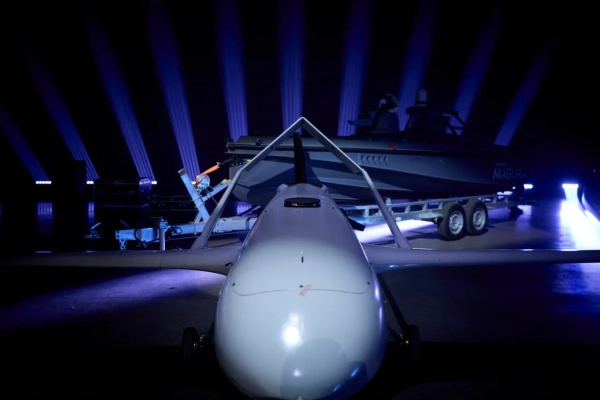
The war in Ukraine increasingly demonstrates a shift towards a new era of warfare. It is becoming evident that military might now depends not on the quantity of large platforms – tanks, aircraft, or ships – but rather on unmanned systems, missiles, and information technologies. Leaders of European countries show some recognition of the changing approaches to warfare – countries are launching their drone programs, working on integrating artificial intelligence, and updating data transmission systems. However, the transformation needs to be deeper if Europe wishes to protect itself.
“Urgent situation” – this is how a patient’s condition, requiring immediate intervention, as survival may be at stake, is typically described in medicine. This very term was used by the organizers of this year’s Paris Air Forum, describing not only the aviation industry but also the overall challenges facing Europe in the realm of security. At the event, which brought together over 2,000 participants, attention was focused not only on civil aviation – the military sphere was in the spotlight, and not so much aircraft as unmanned systems and air defense systems.
According to the Atlas Institute for International Affairs, by 2025, drones accounted for 80% of combat losses on the Ukrainian front – compared to 10% in 2022. Ukraine uses approximately 270,000 drones monthly – and these are estimates, the actual figure could be higher. FPV drones, strike drones for targeting enemy deep assets, ground robotic platforms, and systems… All of this is altering the theater of military operations. But these modern systems are essentially a manifestation of profound changes that Ukraine has reached through bitter war experience, and partner countries are only beginning to realize it.
Move Fast and Scale
Representatives of Ukrainian defense manufacturers, who were among the invited guests at the Paris Air Forum, unanimously agree that the issue of survival and the necessity to confront the enemy here and now has forced them to move as quickly as possible. But this haste is not chaos, nor is it merely a tactical decision; it has become the foundation for strategic changes in the defense sector. Now, from the emergence of an idea to its launch into production, only a few months may pass. If changes are to be made to an already finished product, it can happen practically in real-time and be immediately tested on the battlefield. While Western industrial giants test hypotheses, create test models, and await the economically opportune moment to launch a new product – Ukrainians do not have this luxury of time.
“We have many small teams that work day in and day out to produce and implement our innovation in about a month and test it on the battlefield,” said Oleksandr Yakovenko, founder of FPV drone manufacturer TAF Industries, during the Paris Air Forum.
Another important aspect that Ukrainian manufacturers have understood is that he who scales wins. A product must be created from the outset in a way that facilitates scaling up its production volume. Iryna Terekh, CEO and CTO of Fire Point, present at the Paris Air Forum, cited the example of the FP-1 strike drone: at the start of production, the company aimed to produce 20 units per month, and now produces 260 per day.
“I think the only reason this has been possible is that scalability was built into the design from day one. In the classic defense industry, a product is developed first, tested in the R&D department, and only then transferred to production. We involve industrial design from day one because there’s no point in creating a very good product if you can’t scale it. The principle of economic efficiency and scalability is a key part of the design itself,” Terekh explained.
Be More Economically Efficient
Iryna Terekh emphasizes that we must stop thinking in terms of individual products – aircraft, missiles, ships – and start thinking in terms of capabilities. How can maximum efficiency be achieved in a shorter time and with minimal costs?
The logic is simple but complex to implement due to the need to find the most effective solutions that are easy to scale and relatively inexpensive. But Ukrainian manufacturers are demonstrating remarkable success here too: while Middle Eastern countries hit inexpensive Iranian “shaheds” with multi-million dollar PAC-3 missiles, Ukraine used $2,000 drones against these unmanned aerial vehicles.
Create Integrated Ecosystems and Make Products Compatible
Creating an effective product in application is impossible without considering the real needs of the defense sector. To achieve this, production must be integrated into a cohesive ecosystem of innovation, continuous feedback from the military, an understanding of potential threats, and existing economic and technological capabilities. Ukraine’s defense industry is still on its way to this. But even today, manufacturers actively interact with those who employ their weaponry for continuous product improvement. Domestic manufacturers strive to localize production as much as possible while simultaneously seeking ready-made solutions that will make their weapons as effective as possible. And this leads us to another principle where Europeans have yet to achieve a breakthrough – the creation of platforms that are easily compatible with each other, interact seamlessly, aggregate intelligence data, and connect to common command and control systems.
Therefore, European countries have much to learn from Ukraine. And, first and foremost, this includes understanding the profound transformation of the logic of warfare. Today, army size no longer guarantees superiority, but rapid response to challenges, innovation implementation, understanding real needs and potential threats, and the search for maximally effective, easily scalable solutions offer a chance for victory. Traditional weapon systems are also losing their advantages. They are expensive, often incompatible with each other, their production is lengthy, and has limited volumes.
Ukraine has become the most innovative defense industrial ecosystem in Europe. Its engineers integrate combat experience in drones, electronic warfare, and precision strikes with a speed unattainable by most traditional production cycles. Ukraine’s role needs redefinition: not a victim of aggression, but a global exporter of battle-tested defense technologies critical to Europe’s security. And here, another aspect becomes clear – it is beneficial for Europe to invest in Ukraine’s defense industry. This is not just about deterring the threat from the Russian Federation, but also about the pragmatic opportunity to subsequently benefit from access to the most effective and cheapest next-generation solutions.