
Photo: https://t.me/Koretskyi_official/
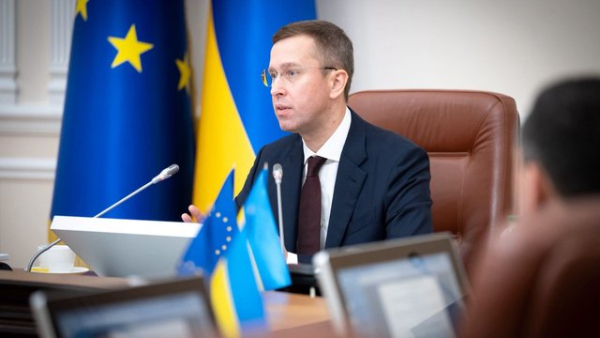
Prime Minister of Ukraine Serhiy Kurets discussed with the President of the European Bank for Reconstruction and Development (EBRD) Odile Renaud-Basso and the bank’s management projects for financial support to Ukraine, primarily in the areas of infrastructure recovery, energy, and transport.
“We discussed existing financial support projects in detail. This primarily concerns energy, transport, and the restoration of critical infrastructure – specific projects with clear results for the country this year. There are also systemic long-term projects. We will work together,” Kurets wrote on Facebook on Saturday.
According to him, the discussion also covered the implementation of best corporate governance standards in the public sector and support for government initiatives regarding the privatization of state-owned banks and state enterprises.
“I am grateful to the EBRD for its unwavering support of Ukraine. Since the beginning of this year alone, the volume of EBRD investments in projects in Ukraine has exceeded EUR1.4 billion,” Kurets added.
As reported, at the end of June, Ukraine and the EBRD signed an agreement for EUR90 million aimed at strengthening the protection of Ukraine’s energy system, restoring network infrastructure, and forming reserves of critical equipment. The loan agreement also includes financing for the reconstruction of three large 330 kV substations, as well as the construction of a new substation in western Ukraine.
The EBRD is one of the key donors for projects protecting electricity transmission system facilities. Since the beginning of the full-scale invasion by the Russian Federation, partners have already directed over EUR582 million to these purposes and the formation of reserves for NEC “Ukrenergo.”
At the URC 2026 Recovery Conference in Gdansk (Poland), agreements were signed envisaging over EUR500 million in new investments and support for Ukraine from the EBRD.
Also, on the sidelines of the conference, the Deputy Director of the EBRD in Ukraine, Mark Magaletsky, who oversees the infrastructure sector, noted that the business model of “Ukrzaliznytsia,” which involved cross-subsidization of passenger transportation at the expense of freight without state funding, had reached its limit during the war and a decline in transportation volumes and requires changes. He also noted the need to adjust freight tariff rates, which have not changed since 2022. He stated that restructuring this model is a condition for the company to continue receiving assistance from the EBRD, which has already provided Ukrzaliznytsia with over EUR700 million since the beginning of the Russian aggression, including EUR54 million in grants.