

“>
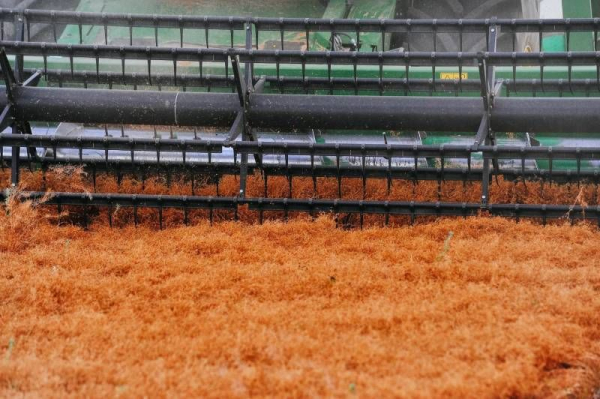
Photo: Tekom Agro Group
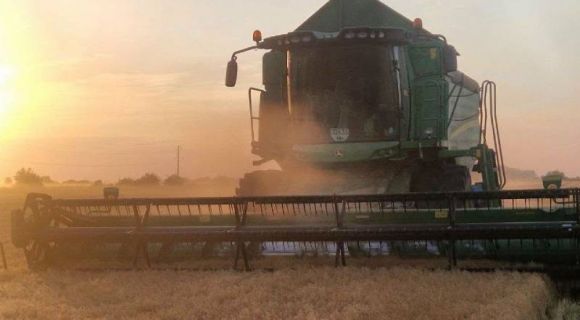
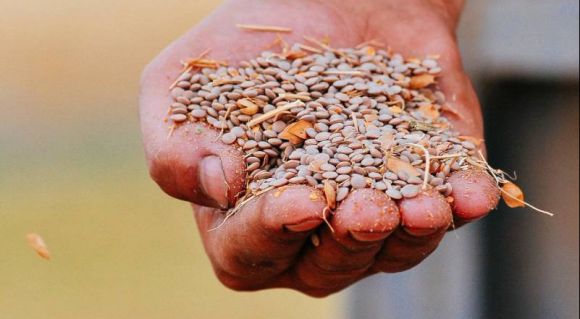
In the farms of Tekom Agro Group in the Odesa region, the lentil harvest has been completed. The yield ranges from 1.5 to 2.4 t/ha, depending on the field, as reported on the company’s Facebook page.
According to Serhiy Shtyrbulov, deputy head of the agro-association for production, a total of over 1000 hectares of Canadian Maxim red lentil variety were sown for the 2026 harvest in three farms. The largest areas for the crop were allocated to «Agro firm «Pivdenna» — over 650 hectares.
In the Bilhorod-Dnistrovskyi district, red lentils have been grown for the second season, gradually accumulating practical experience with this crop.
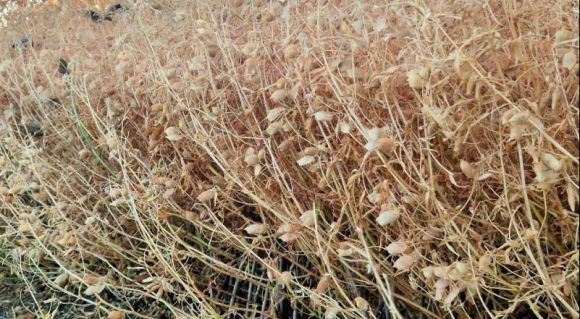
«The current season turned out to be atypical for us in lentil cultivation, primarily due to excessive rainfall during the budding and flowering periods. This, in turn, led to a prolonged flowering period for the crop, active plant growth, and lodging after rains, thunderstorms, and strong winds that occurred in the summer in the area where our agricultural enterprise’s lands are located. These factors significantly complicated and extended the lentil harvest period», — said Oleksiy Lohinov, director of «Agro firm «Pivdenna».
His deputy for production, Ruslan Hrytsenko, added that this season has seen significant fluctuations in yield between individual fields, which confirms the high sensitivity of lentils to predecessors and weather conditions.
«The yield indicators are quite varied: for example, there were several fields that yielded 2.0-2.4 t/ha, and there were also fields yielding 1.5-1.8 t/ha. Despite the peculiarities of this crop, we plan to continue working with lentils, as we see its potential for cultivation in the conditions of our dry Budzhak steppe», — added Oleksiy Lohinov.
TDVV «Chornomorets» from the Odesa district and TOV «Lyman» from the Rozdilnianskyi district sowed this legume crop for the first time this year. They also emphasize the variability in lentil yield indicators on practically every field.
«We have drawn our own initial conclusions that lentils react very strongly to the soil quality in the field where they are grown. That is, to the predecessors, to the humus content — the main substance that gives plants strength. Soil acidity is also important, as the pH level affects the plant’s nutrient uptake. Lentils also react to the amount of nitrogen, phosphorus, and potassium based on which fertilizers or plant protection products were applied to a particular field before or, conversely, not applied at all. Because the sowing and care technology was the same over an area of 300 hectares, but the yield results are different, depending on the history of each field», — emphasized Ivan Olovatskyi, deputy director for production at TDVV «Chornomorets».
Alla Husarova, SuperAgronom.com
Read also: Lentil cultivation technology: sowing, nutrition, protection, harvesting nuances


Be the first to know the latest agronomic news from Ukraine on our Facebook page, Telegram, and subscribe to SuperAgronom’s Instagram.