

“>
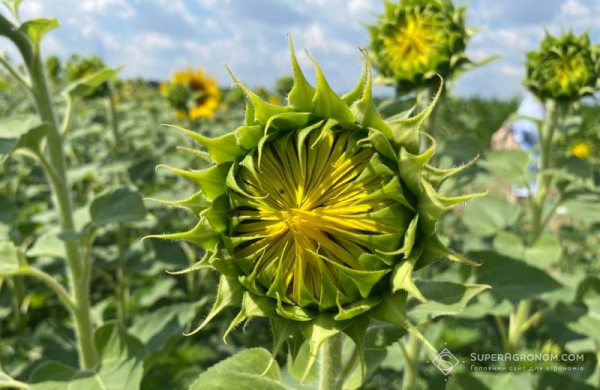
Photo: SuperAgronom.com
In the midst of the winter crop harvest, farms are facing a new threat: bed bugs are massively attacking sunflowers. Due to a shortage of labor and a focus on harvesting, field treatments are being missed, leading to losses, writes Kurkul.com.
As noted by Serhii Korniushchenko, agrotechnology manager in the Eastern region of LNZ Group, in the Dnipropetrovsk and Kharkiv regions, due to the delayed arrival of bed bugs by 2-3 weeks (after wheat treatment), the pests have massively moved to sunflowers.
“Wheat is already hard, with about 14-16% moisture, and the bed bugs cannot pierce it. Therefore, they have moved to sunflowers – they need to feed somewhere and lay eggs for the new generation. We are observing their massive appearance in the Dnipropetrovsk and Kharkiv regions,” explained Serhii Korniushchenko.
Farmers are focused on the harvest, and due to a labor shortage, they are missing treatments, which leads to losses.
“Agricultural enterprises are currently in the midst of their work, people have switched to combines or sprayers, and because of this, they have missed timely application of protective agents,” he added.
Read also: Aphids carry viral infections: farmers are advised to inspect corn and sunflower crops
The economic threshold of harmfulness for bed bugs on sunflowers is 2-3 individuals per square meter. At the same time, the specialist emphasizes that field monitoring should be carried out daily, starting from the early stages of crop development.
“About 20 species of bed bugs can feed on sunflowers. The insects pierce plant tissues and suck out cell sap, damaging leaves, stems, flower heads, and seeds. Necroses appear at the feeding sites, and the affected tissues gradually die off. In the damaged areas, after moisture enters, various types of rot can develop, further complicating the condition of the plants,” noted the specialist.
Bed bugs cause the greatest damage to seeds: early infestation leads to their drying out, and late infestation leads to deterioration of quality (reduction in thousand-seed weight, oil content, and an increase in oil acid value by 10-20 times).
Given the situation, LNZ Group recommends using the insecticides Presto (0.3-0.4 l/ha), Twiks (1.0-1.5 l/ha), or Octant Turbo (0.25 l/ha). During the flowering phase, Synerid (0.4 l/ha) will be effective. Treatments can be combined with fungicides, except for organophosphorus compounds.
In addition, LNZ Group specialists expect a second wave of cutworms, which may exacerbate the situation with sunflower protection, as well as the development of new rots due to weather conditions.
Alla Husarova, SuperAgronom.com
Read also: The crop protection market in Ukraine: European integration, generics, and new rules of the game
Be the first to learn about the latest agronomic news from Ukraine on our Facebook page, Telegram, and subscribe to SuperAgronom’s Instagram.