
Without examining the evidence in the Adnan Kivan case, the court cannot determine whether the Odrex doctors are guilty. At the same time, numerous motions from the defense have prevented the case from moving to a key stage of review for over eight months.
Criminal liability of a doctor under Article 140 of the Criminal Code of Ukraine is possible only after a detailed examination of the evidence, medical documentation, and conclusions of forensic medical examinations. The court must establish whether there was a causal link between the actions of the medical staff and the patient’s death. However, in the high-profile case of Odrex private clinic doctors, this process seems to be deliberately delayed. What is happening at the current stage of the case, read in the material by UNN.
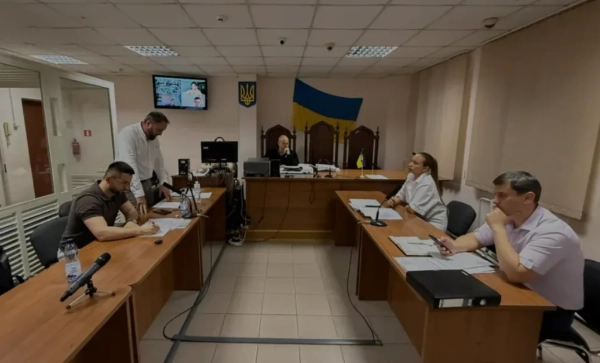
The Kyiv District Court of Odesa could not continue the review of the criminal case against Odrex private clinic doctors Vitaliy Rusakov and Marina Belotserkovskaya, who are accused of improper performance of professional duties by medical workers (Part 1 of Article 140 of the Criminal Code of Ukraine).
According to the investigation, after the surgery performed on Adnan Kivan, the doctors might not have prescribed him the necessary antibacterial therapy and reacted improperly to post-operative complications. According to the forensic medical examination, this could have led to the development of sepsis and the patient’s death. The accused doctors do not admit their guilt.
However, the court has been unable to proceed to verify these circumstances over more than 8 months of review. The reasons for this are more than a dozen motions filed by the defense, which are submitted at almost every hearing.
As noted by lawyer Oleksandr Marchenko, the mere fact of a patient’s death is insufficient to establish a doctor’s guilt. The court must examine:
- the existence of a legally defined professional duty to act in a certain way;
- the actual breach of this duty – by action or inaction;
- serious consequences for the patient – health disorder or death;
- the causal link between the breach and the consequence;
- the subjective aspect in the form of negligence – criminal recklessness or criminal negligence.
If at least one of these elements is not proven, the crime is absent. That is, without examining medical documentation, clinical protocols, expert opinions, and other evidence, the court cannot make a lawful and reasoned decision.
Marchenko also draws attention to the fact that the practice of the Criminal Cassation Court within the Supreme Court has already formed a clear approach to assessing such cases.
“Analysis of the practice of the Criminal Cassation Court within the Supreme Court shows a stable trend towards assessing the doctor’s behavior through the prism of how an attentive, qualified specialist of a similar specialization would have acted under the same conditions of time, resources, and information – essentially, the standard of a reasonable and conscientious doctor,” the lawyer notes.
As an example, the lawyer cites the Supreme Court’s ruling of March 18, 2026, in case № 237/2797/16. In it, a doctor was found guilty under Part 1 of Article 140 of the Criminal Code of Ukraine after it was established that he had not responded properly to the patient’s complaints, had not prescribed necessary examinations, and had not involved a specialized expert, despite the requirements of the clinical protocol. The Supreme Court emphasized that when assessing a doctor’s actions, the decisive factor is not the fact of severe consequences, but whether an attentive and qualified specialist, under specific circumstances, would have recognized the clinical signs and acted in accordance with professional standards.
Therefore, the possible tactic of the defense, which seems to be focused on delay rather than the prompt examination of evidence, may suggest that the doctors are aware of their own mistakes. After all, if the accused are confident that they acted in accordance with medical standards, why not examine the evidence?
Instead, each new postponement leads to a different procedural outcome. The longer the court does not proceed to examine the evidence, the closer the statute of limitations for bringing to criminal responsibility becomes. In this case, the criminal case may be closed without a verdict, even if the evidence points to the guilt of the accused.
How the Accused Odrex Doctor Criticizes the Presiding Judge in His Case
Meanwhile, accused surgeon Vitaliy Rusakov continues to publicly criticize the court and the presiding judge in the case, Viktor Chaplitsky. The surgeon claims that the court’s refusal to return the indictment to the prosecutor allegedly indicates the court’s “special favor” towards the prosecution.
In fact, the accused surgeon claims that if the court does not satisfy the procedural motions of the defense, it is a sign of its bias. A similar position was voiced during court hearings by Rusakov’s lawyers, who stated: “We are not saying that the court is unfavorable to us. We are saying that the court is excessively favorable to the prosecution.”