

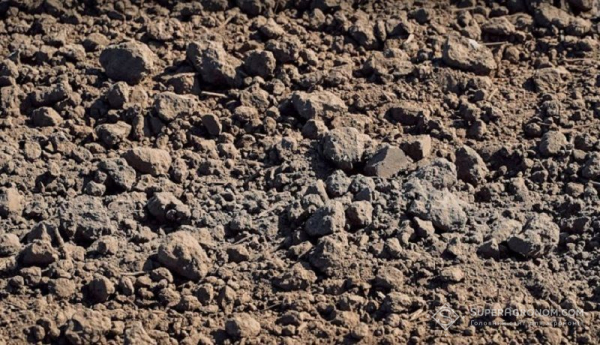
Photo: SuperAgronom.com
A large-scale, six-year ecological study, published in the journal Proceedings of the National Academy of Sciences (PNAS), examines how prolonged and severe drought alters our planet’s hidden underground life – its soil microbiome (bacteria, fungi, and microorganisms).
According to the study’s authors, soil not only dries out under the influence of drought – the microbial community begins to rapidly change (“drift”). The longer the drought persists, the further the microbiome deviates from its normal state. Due to intense selection, only highly specialized microbial species survive. The community becomes “locked” in a distorted, unnatural state. Scientists warn: even if the drought ceases and rains return, restoring the soil to its original healthy balance will be extremely difficult, if not impossible.
“We have long known that above-ground plant communities respond to drought, but what happens underground has been much harder to observe. Now that we have six years of continuous data, we are finding that soil communities are not just stressed by drought; they are moving, and the further they move, the less likely recovery becomes,” said Jizhong Zhou, senior author of the study.
With the decline in soil biodiversity, ecosystem processes responsible for nutrient cycling (carbon, nitrogen, and sulfur) have significantly slowed down. This means the land loses its capacity to retain nutrients and support plant growth.
To counteract the detrimental impact of drought on underground life, it is proposed to reform ecological policies and agricultural practices. The scientists’ key message is: one cannot simply passively wait for the drought to end – soil must be actively managed, as its changes are difficult to reverse.
Scientists recommend including the state of soil microbes in national biodiversity conservation programs.
Active application of compost, mulch, and biochar (wood charcoal) will help create protective micropores in the soil (refuges for microbial survival) and retain residual moisture.
Artificial inoculation of affected soils with laboratory-grown “cocktails” of drought-resistant bacteria (PGPB) and fungi that stimulate plant growth and help them retain moisture can also be an effective counter-strategy.
Abandoning monocultures is recommended. Sowing a mixture of deep-rooted perennial grasses and drought-resistant crops. The roots of different plants release different sugars, feeding and supporting the diversity of underground bacteria even during severe water deficits. Scientists also advise completely abandoning deep plowing in arid regions (no-till technology) to avoid destroying the fragile soil capillaries and the protective biofilms formed by microbes.
The Art of Plant Nutrition
All About Crop Nutrition

Olena Basanets, SuperAgronom.com
Be the first to learn the latest agronomic news from Ukraine on our Facebook, Telegram pages, and subscribe to SuperAgronom’s Instagram.