

The interpretation of aircraft leasing as royalties by the State Tax Service and the Bureau of Economic Security contradicts the principles of applying international conventions on the avoidance of double taxation. Expert in international tax law Olena Kuzniechikova emphasizes that the Ministry of Finance’s official clarification, not criminal prosecution of businesses, should resolve the issue.

Ukrainian civil aviation has found itself at the center of a tax dispute due to a new interpretation by the State Tax Service and the Bureau of Economic Security of transactions involving aircraft leasing. Despite no changes in legislation or international conventions on the avoidance of double taxation, supervisory authorities have begun to interpret certain lease payments as royalties, which has already led to criminal prosecution of Ukrainian airlines, reports UNN.
The new approach by the STS and BES is unlawful and jeopardizes the competitiveness of Ukrainian air carriers, potentially leading to company bankruptcies. This involves an attempt to accrue 15% royalties for airlines on aircraft lease agreements concluded many years ago. Essentially, the rules of the game are being attempted to be changed without amending the legislation.
Meanwhile, as explained during the roundtable “New Tax Practice Regarding Aircraft Leasing” by Olena Kuzniechikova, managing partner of LAW GUIDE law firm and expert in international tax law, international double taxation avoidance agreements cannot be applied uniformly. Each convention has its own specifics, and the determining factor is not the formal name of the payment but the substance of the specific economic transaction.
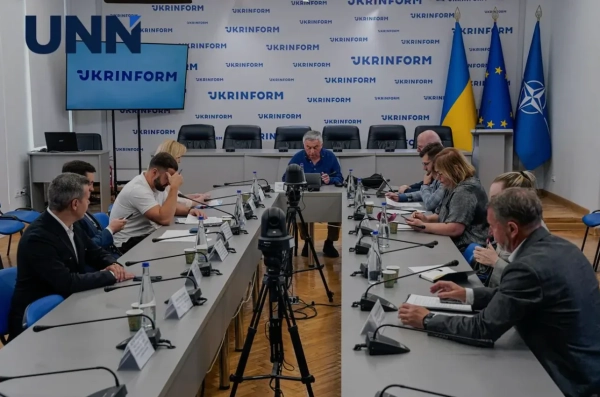
If we look at specific agreements, then in terms of the substance of the operations, payments originating from Ukraine to abroad can generally be interpreted under at least five different articles. This could include non-resident entrepreneurial activity, international transportation, classic leasing, and even other types of income. Unfortunately, the tax service rarely fully considers the entire essence of economic operations and specific conventions.
– Kuzniechikova noted.
This is precisely why the issue cannot be resolved by universally interpreting all lease agreements as royalties. According to Kuzniechikova, in situations where international agreements allow for different interpretations, the state should adhere to one of the fundamental principles of tax law – interpret ambiguities in favor of the taxpayer.
If something can be interpreted both in favor of the budget and in favor of the taxpayer, it should be interpreted in favor of the taxpayer. And in international conventions concerning such operations, there are indeed highly contentious situations that can be interpreted completely differently depending on the content of the operation.
– she emphasized.
The expert believes that resolving this issue by initiating criminal proceedings against airlines is incorrect. She pointed out that the tax authorities’ official position only changed in 2024, although most airlines’ agreements were concluded much earlier and had not raised any claims from the state for years.
Involving law enforcement agencies before the occurrence of a finalized tax liability is a legal absurdity. According to the law, a criminal case for tax evasion can only arise after the completion of administrative or judicial appeal procedures.
– Kuzniechikova explained.
Therefore, in her opinion, the resolution of the dispute should begin not with criminal prosecution but with the formation of a unified state position on the application of international conventions. To achieve this, the Ministry of Finance must prepare a general tax consultation that ensures a consistent interpretation of the norms for both businesses and supervisory authorities.
Reminder
Since 2024, the STS has begun to apply a new approach to taxing aircraft leasing, interpreting certain lease payments as royalties. Based on this position, the BES has opened criminal proceedings against at least five Ukrainian airlines: МАУ, “Aviakompania Constanta,” “Urga,” “N3OPERATION” and “Skyline Express.”
According to UNN, in several of these proceedings, the BES’s claims are based precisely on the interpretation of international double taxation avoidance conventions, and the amounts of allegedly unpaid taxes reach tens of millions of hryvnias.